

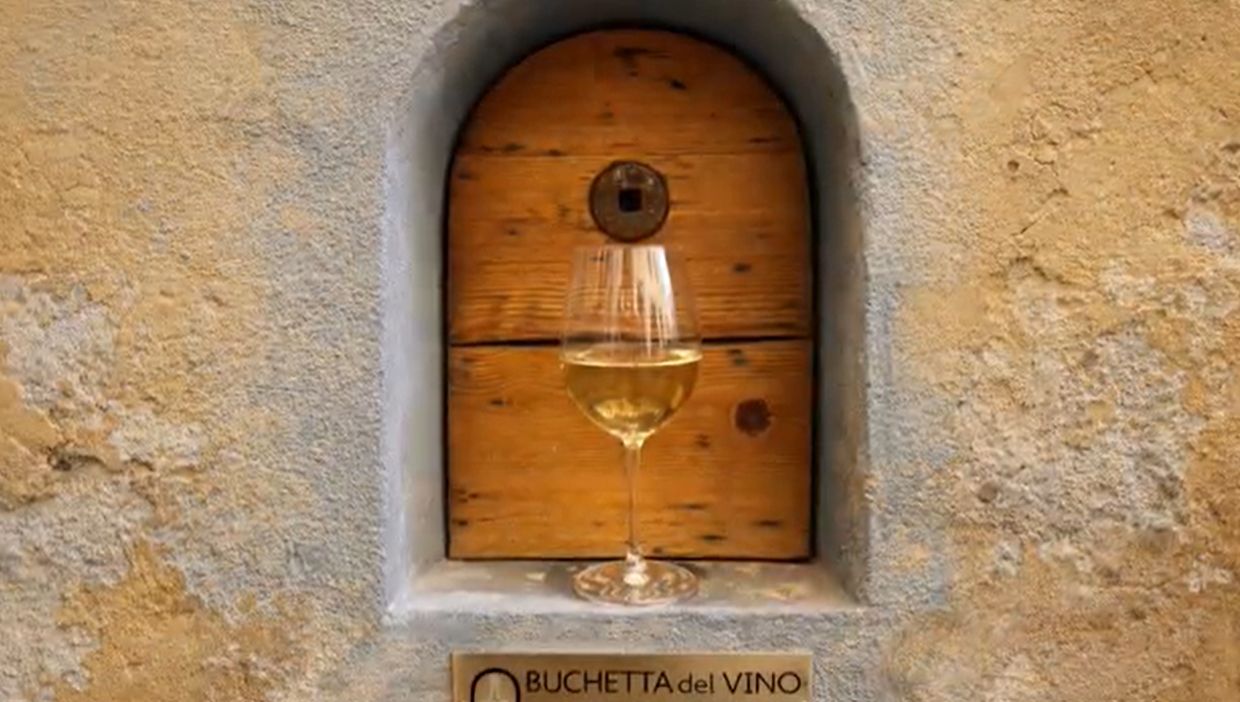
In recent years, the phenomenon of the Florentine wine windows has conquered social media and the streets of Florence. What started before the COVID pandemic as an amusing alternative to a more formal aperitivo became a widespread trend among tourists visiting Florence.
Buying a glass of wine or a cocktail through an old wine window to then drink it on the street became a top attraction in town, and today it seems to surpass the popularity of the Florentine museums and historical sights.
As a consequence, many bars and restaurants started opening fake wine windows, just to be able to join the trend. In the meantime, the local community that tries to resist the mass tourism and lives in the historical centre, observes the evolution of this phenomenon with a mix of astonishment and disgust. Crowds of tourists blocking the streets, as they sip their wine and spritz, sitting on dirty pavements, became part of our daily life.
As amusing as it seems, the wine window phenomenon is out of control. But how does this folly start? What are these wine widows really? Let’s discover the story of wine windows together.
Wine windows in Florence: what are they?
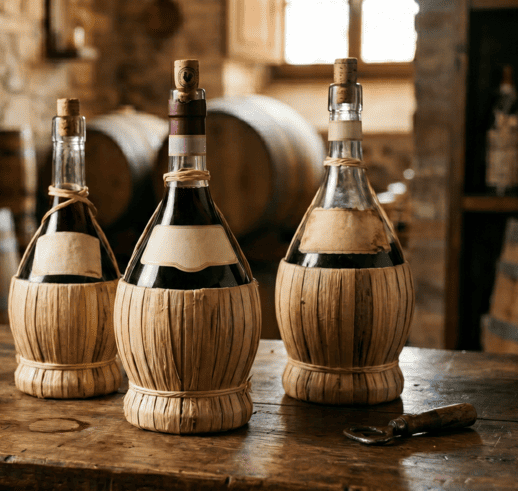
Wine windows are small, arched openings located on the side walls of the palaces of the Florentine nobility, used in the past for the sale of wine in fiaschi.
The fiaschi are typical Tuscan wine bottles, used since the Middle Ages. They are rounded on the bottom and covered with straw. You can still find the Chianti wine served in fiaschi in some of the Florentine trattorias.
The wine windows, known in the past as finestrelli del vino, and today called buchette del vino, might have different forms or decorations. They all have the same size, however, which depends on the height of the fiasco.
In the past, they were closed with a wooden door decorated with a knocker that the clients used to attract the attention of the seller.
How did this curious tradition of selling wine through wine windows start?
Before becoming a viral Instagram trend and one of Florence’s most photographed curiosities, wine windows had a very different purpose rooted deep in the city’s history. To understand why these tiny openings exist at all, we need to go back centuries—when wine, trade, taxes, and noble privileges shaped everyday life in Florence and gave birth to one of its most unusual traditions.
Wine windows Florence: their history
Wine has long been a cherished beverage in Florence. It might surprise you, but in the Middle Ages and the Early Modern period, everyone was served wine: men, women, but also kids and pregnant women. Clean water was not easily accessible.
The Arno River, which passes through the city, was heavily polluted due to the textile industry and the dyes used to colour the wool. The same dyes seem to have had an impact on the water from the wells spread across Florence. If water was not an option, wine was the only alternative.
Wine windows and wine distribution during the Middle Ages
The sale of wine was controlled by the guild of the wine sellers (the Vinattieri) that gathered the owners of osterie and taverne. They were subjected to heavy taxes. In fact, tax income generated by wine distribution was so important for the Florentine public finances that the city issued a coin called “barile”. It was worth the exact equivalent of taxes for one barrel (barile) of wine. This smart operation was supposed to speed up and facilitate the calculation of the due tax.
The only exception to the rule that allowed the sale of wine exclusively to the guild members was the special permit for the landowners to sell their own wine at their private palaces in the city. This sale was exempt from taxes, and so it represented a valid source of income for the Florentine wealthy families. The only rule was that they could sell their wine exclusively by fiaschi. Any smaller containers were not allowed.
Already during the 14th century, the rich Florentine families were distributing their wine at their urban residences. The first finestrini per la vendita del vino, the wine windows, were cut in the big wooden door of the Florentine palaces. Few barrels of wine were supposedly positioned in the entrance gate. Clients knocking on the wooden window would be served by a servant, whose task was to fill up the fiaschi with vino vermiglio (red wine) or trebbiano (white wine).
The wine windows in the Renaissance
The number of wine windows grows rapidly during the 16th century. This process was accelerated by the deep economic crisis that hit Florence at the beginning of the century. The flourishing textile industry lost its attractiveness because of the discovery of America and important changes in the world trade routes. At the same time, the instauration of the Duchy ruled by the Medici family also had a negative impact on the Florentine economy and trade, as the wealth was now concentrated in the hands of the rulers.
The Florentine nobility used their privilege and enlarged the networks for wine distribution in town. The documents prove that a single family was able to sell 50 fiaschi a day from their windows.
During the 16th century, the wine widows were open on the side walls of the palaces, in correspondence to a wide room where the vinaio (the wine seller) kept the barrels and his desk (scrittoio), keeping precise accounting of his trade.
The fact that even the Ducal family kept active the sale of wine at the Pitti Palace amused and astonished foreign visitors and the British Grand Tourers, who visited Florence during the 18th century. Tobias Smollett, a Scottish novelist who visited Florence in 1765, wrote in his diary:
“With all their pride, however, the nobles of Florence are humble enough to enter into partnership with shopkeepers, and even to sell wine by retail. It is an undoubted fact that in every palace or great house in this city, there is a little window fronting the street, provided with an iron-knocker, and over it hangs an empty flask, by way of sign-post. Thither you send your servant to buy a bottle of wine. He knocks at the little wicket, which is opened immediately by a domestic, who supplies him with what he wants, and receives the money like the waiter of any other cabaret. It is pretty extraordinary that it should not be deemed a disparagement in a nobleman to sell half a pound of figs, or a palm of ribbon or tape or to take money for a flask of sour wine; and yet be counted infamous to match his daughter in the family of a person who has distinguished himself in any one of the learned professions.”
The wine widows facilitated the direct sale of wine, from the producer to the customer, until the 1950s, when the modern distribution chains rendered them obsolete.
The wine widows and the pandemics
The rediscovery of the wine widows in Florence began in 2019, when Babae, a restaurant in the Oltrarno, reopened its window and started selling wine by the glass.
When the COVID pandemic hit, many Florentine businesses rediscovered the wine widows and started using them to keep selling their products, maintaining social distancing.
In fact, this was a return to a well-known tradition. In fact, already during the pandemic of bubonic plague, which hit Florence between 1630 and 1633, many products were sold “allo sportello”, meaning “through a window”. These weren’t necessarily wine windows. It seems that the shops simply kept their door closed, opening only a small opening, necessary for the exchange of products and money. In order to avoid contagion, the coins were first dropped into the vinegar for disinfection.
After the COVID pandemic, the phenomenon of wine widows exploded.
Today you can buy wine by the glass almost at every corner, and many of the widows, run by the restaurants, are fake, created by the owners to make money out of this new fashion.
The locals struggle to survive in Florence, driven by new trends born on social media. This is why I invite you to a photo hunt: try to find as many wine windows as possible, but avoid being part of the crowd that blocks the streets, sipping spritz (that isn’t even a Florentine drink) on the dirty pavement.
What does a wine window in Florence look like?
Wine windows are little arched openings on the side walls of the Florentine palaces, decorated with a stone frame. They are all of the same size, ca. 20×30 cm (8×12 inches), which corresponds to the size of a fiasco.
Some of them also carry longer inscriptions that inform the customers about the opening hours of this particular wine shop.
How many wine windows are in Florence?
Today, still 184 wine windows are visible on the walls of the Florentine palaces. This number changes every year as new windows are found and uncovered by the owners of the building.
Organise your photo hunt and collect the pictures of the Florentine wine windows!
Wine windows Florence: how to find them outside of the city?
The custom of selling wine at the noble palace directly to the customers spread from Florence across the entire region. You can also find the wine windows in Pisa, Pistoia, Siena, San Gimignano and many other Tuscan localities. Sharpen your sight and hunt for the wine windows during your Tuscan holiday!
Book a custom tour of Florence with us – Include the Florence Wine Windows!
Want to experience Florence beyond the surface and discover the real stories behind its most iconic spots—including the famous wine windows?
Book a custom tour of Florence with us and explore the city like a local, with hidden history, secret corners, and unforgettable details you won’t find in guidebooks!